Showing posts with label Asia. Show all posts

Yangzhou Zhongshuge Bookstore (Yangzhou/ China)

Yangzhou Zhongshuge Bookstore (Yangzhou/ China)

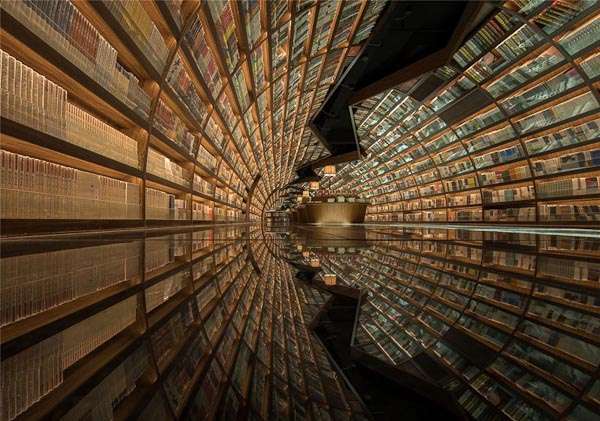
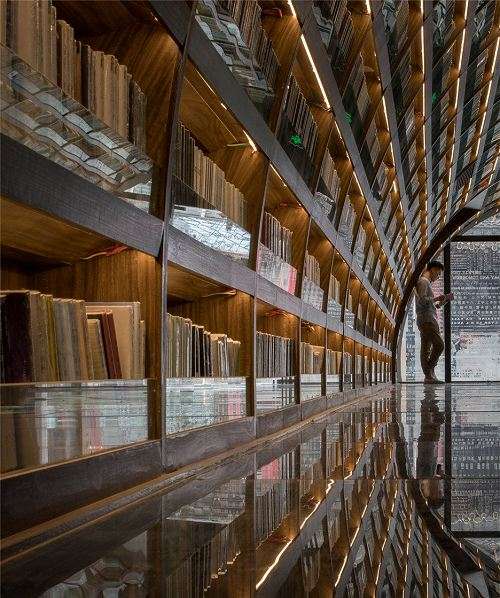
This futuristic bookstore was designed by Li Xiang of XL Muse Architects. With arched walls of books, organic shapes and reflective black mirror finish on the floor, visitors are given a sense of entering another world.

Yangzhou Zhongshuge Bookstore (Yangzhou/ China)

The Hideout (Selat, Bali/ Indonesia)

The Hideout - Selat  Bali Indonesia

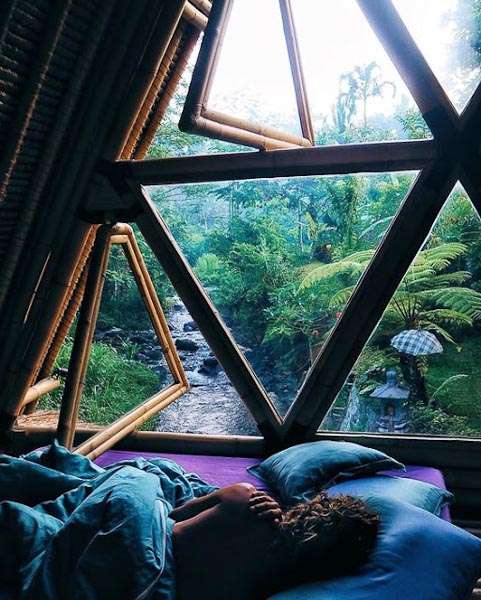
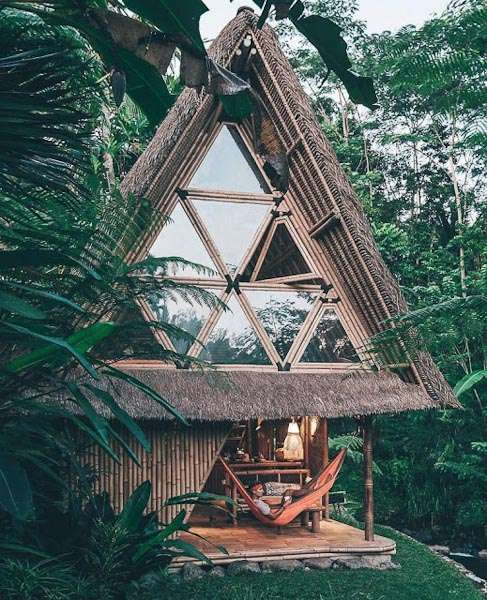
The Hideout lies in the mountains of Gunung Agung volcano and was built and handcrafted in 2015. Nestled by the riverside inbetween rice fields the bamboo house is a unique eco stay for adventurous travellers who want to experience rustic Balinese village life.

The Hideout - Selat  Bali Indonesia

Nyaung Ohak & Shwe Inn Thein (Indein/ Myanmar)

Nyaung Ohak & Shwe Inn Thein (Indein/ Myanmar)

Inside Myanmar’s jungles, lies the small village of Indein. It is reachable only by boat through the long & narrow Inn Thein creek and only in the rainy season and winter as the water is too shallow during summer.
Behind the village there's hundreds of ancient overgrown pagodas, most of them crumbling into ruin - a few of them restored. They are decorated with ornate stucco carvings of mythical animals, deva (celestial beings) and chinthe (mythical lions). Some have images of the Buddha.
There are two sets of pagodas around Indein — Nyaung Ohak and on top of a hill there's Shwe Inn Thein. Most of the pagodas there were constructed in the 17th and 18th centuries.

Jal Mahal - Water palace (Jaipur/ India)

Jal Mahal water palace india

Jal Mahal (meaning "Water Palace") seems to float in the middle of the Man Sagar Lake in Jaipur city in Rajasthan, India. The palace and the lake around it were renovated and enlarged in the 18th century by Maharaja Jai Singh II of Amber. Traditional boat-makers from Vrindavan have crafted the Rajput style wooden boats through which you reach the palace. Across the lake, you can view the Aravalli hills, dotted with temples and ancient forts, and on the other side, bustling Jaipur.

Pink Mosque - Masjid Dimaukom (Datu Saudi Ampatuan/ The Philippines)


The Masjid Dimaukom or Pink Mosque is a mosque in the Philippines. It was painted pink to symbolize peace and love and was built by Christian workmen to symbolize unity and inter-faith brotherhood.

Abandoned Overgrown Village (Shengshan Island/ China)


At the mouth of the Yangtze River, in the Shengsi Archipelago there's 394 islands, 18 of which are inhabitable.
The subtropical region attracts over 100,000 fishers every winter, but
because of this seasonality, this old fishing village on the island of Shengshan was abandoned when the fishers chose to live and work mainland where fresh catches could be more easily transported and sold. The abandoned village now is slowly being reclaimed by nature, swallowing up buildings and roads.

City of Mud Skyscrapers (Shibam /Yemen)


The desert city of Shibam is known for its high-rise multi-storey buildings formed of mud, sometimes being referred to as the “Manhattan of the Desert.”

The structures date back to the 16th century. After a big flood destroyed the unprotected settlements the new city was built on a hill. The sun-dried mud high-rises provided protection against the elements and an advantage for the city’s defense. Shibam’s location as the convergence point of Asia, Africa, and Europe made it an important stop for traders going through the spice routes. Over time, fresh layers of mud must be applied to the eroded walls to keep the edifices strong and stable.
Today, Shibam has 7,000 thriving residents and has been declared a UNESCO World Heritage Site.


Source:
http://whenonearth.net

Ihwa Mural Village (Seoul/ South Korea)


Over sixty murals fill the walls of the charming village, painted as part of the "ART in the City 2006" campaign by the Ministry of Culture and Tourism to rejuvenate the image of these smaller, older neighborhoods of Seoul and give them an artistic and cultural makeover. Now it has become a bit of a tourist destination and some of the houses have been converted into restaurants and cute little cafes because of it.
The Mural Village is located in Ihwa-dong, Jongno-gu, Seoul-si.

House covered in Shells (Lingshan Island/ China)


Xiao Yongsheng, 58, a local resident on Lingshan Island of east China's Shandong province, spent 2 years decorating the outer walls and roof of his house with more than 1 million shells he collected. They come in all shapes and sizes with the largest weighing 4kg and the smallest one being only 3mm long.
“I used them for everything,” he explained. “For decoration, for roof tiles, as handles, and even crushed up to make mosaics. They are everywhere.” Xiao uses the house as a museum, displaying the history of the island and the daily life of local fishermen.
The Lotus Building (Wujin/ China)


Completed in 2013, the Lotus Building appears to be floating on an artificial lake in Wujin, China. It was designed by Australian architecture firm Studio505, who took inspiration from the lotus flower, and integrated its 3 stages of growth into the building's shape. From the new young bud, to the full ripe flower through to the opened bloom with a seed pod within it.
The city government commissioned it to serve as a public park and multi-use space with exhibition and conference rooms that are open to the public. The building extends two stories under water and visitors enter from below into a vaulted, cathedral-like interior space where a combination of colour and light create a bright and uplifting interior atmosphere.

Ice and Snow Sculpture Festival (Harbin/ China)


The Harbin International Ice and Snow Sculpture Festival is an annual winter festival in Harbin, Heilongjiang, China. It's the largest ice and snow festival in the world which brings forward the world's biggest ice sculptures. Thousands of snow artists and sculptors from around the world build a fantastic city of ice which at night gets illuminated by LED lamps and lasers.
The festival usually starts in January and lasts one month (weather permitting). The photos in this post are from the 2012, 2014 & 2015 festivals.


Akebono Kodomo no Mori Koen (Hanno/ Japan)


Akebono Kodomo no Mori Koen is a "Moomin Valley" inspired park for children, consisting of a collection of adorable buildings, bridges, a tree house, and a light-house in the center of a small pond.
The white house (pictured above) has live grass growing on the roof. The inside of the building has three floors, with elaborate, wooden staircases & a beautiful iron railing.

Shell Villa (Kitasaku/ Japan)


The ultra modern design of the Shell Villa is the work of Japanese firm ARTechnic Architects. Curved concrete slopes around tall fir trees and while it's not a part of nature it was designed to coexist in harmony within it.

Pink Palace Of the Winds - Hawa Mahal (Jaipur/ India)


Hawa Mahal meaning "Palace of Winds" or "Palace of the Breeze" was built in 1799 in red and pink coloured sand stone, tying in with other monuments in the city that give Jaipur the name "Pink City". (Also check out Jodphur - The Blue City)
Essentially it was a a high screen wall built so the women of the royal household could observe street festivities, peeking through the window's intricate latticework while remaining unseen from the outside since they had to obey strict "purdah" (face cover).
The palace was built in the form of Hindu god Krishna's crown and sits on the edge of the City Palace extending to the women's chambers.
It is particularly striking when viewed early in the morning, lit with the golden light of sunrise.

Giant Vintage Camera Café (Yangpyeong/ South Korea)


This 2 storey Rolleiflex is actually a coffee shop called "Dreaming Camera" in Yangpyeong County, east of Seoul. It was the dream of a former air-force helicopter pilot to create the Giant Camera Coffee Shop and it finally came true when he built it right next door to the bungalow he shared with his wife & daughter.

Shah Cheragh Mirror Mosque (Shiraz/ Iran)


Shāh-é-Chérāgh (Persian for "King of the Light") is a funerary monument and mosque in the city of Shiraz, Iran. It houses the tomb of the brothers Ahmad and Muhammad, sons of Mūsā al-Kādhim and brothers of ‘Alī ar-Ridhā.

From the outside it looks like a traditional mosque but the interior is mind blowing! Everything is covered in intricate mosaics of mirror & coloured glass.

Teapot Shaped Building (Meitan County/ China)


The world's biggest teapot stands 73.8 meters tall and measures 24 meters at the maximum diameter. It houses a tea museum which is very fitting as Meitan County is known as the “hometown of Chinese green tea”.

China's Atlantis - the Underwater City of Shicheng (Qiandao Lake/ China)


Shicheng (literally meaning "Lion City") was built during the Eastern Han Dynasty (AD 25 - 200). The name comes from Wu Shi Mountain (or "Five Lion" Mountain), which lies behind the city.
In 1959 the whole valley got submerged for the construction of the Xin'an River Hydropower Station, creating Qiandao Lake ("Thousand Island Lake").
The city is now a time capsule shielded from erosion by wind, rain and sun and remains undisturbed at a depth of 26-40m. Stairs in ancient houses, walls and memorial arches remain surprisingly intact.

Meenakshi Amman Temple (Madurai/ India)


The Meenakshi Amman Temple is a historic Hindu temple located in the temple city of Madurai. Built between 1623 and 1655 it is dedicated to Parvati, known as Meenakshi, and her consort, Shiva, here named Sundareswarar.
There are an estimated 33,000 sculptures in the temple. It was on the list of top 30 nominees for the "New Seven Wonders of the World" and the annual 10-day Meenakshi Tirukalyanam festival, celebrated during April and May, attracts 1 million visitors.

Sultan Qaboos Grand Mosque (Muscat/ Oman)


The Sultan Qaboos Grand Mosque is the main Mosque in the Sultanate of Oman. Construction started in 1995 and took six years and four months to complete.

Major features of the interior design are the chandelier (14 meters tall) and the carpet covering the 4,343 square meter area of the prayer hall. It contains, 1,700,000,000 knots, weighs 21 tonnes and took four years to produce making it the world's second largest single piece carpet (#1 belongs to the Sheikh Zayed Grand Mosque in Abu Dhabi).
Related Posts Plugin for WordPress, Blogger...