Showing posts with label North America. Show all posts

Cabin made from windows (West Virginia)

Cabin made from windows (West Virginia)

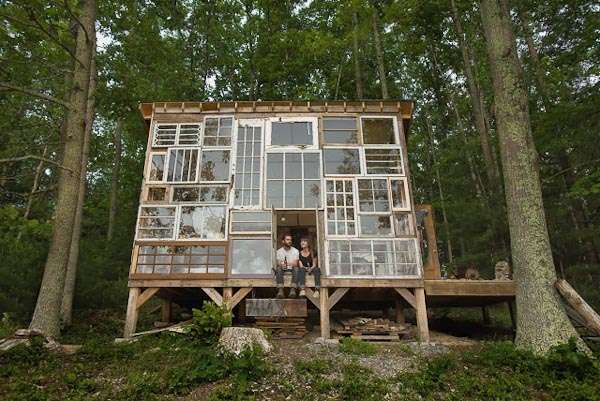
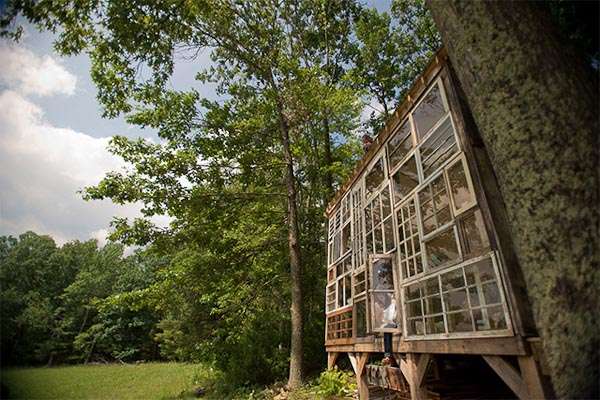
While on their very first date, photographer Nick Olson & designer Lilah Horwitz went on a walk in the West Virginia countryside. They watched the sunset and wondered what it would be like to live in a house where the entire facade was made from windows, so the sunset would never be contained within a small space.
And so a year later the two quit their jobs and embarked on a road trip starting in Pennsylvania to collect old windows from garage sales and antique dealers. Back in West Virginia they built the glass cabin in the exact same spot where they imagined it on their fist date.
Cabin made from windows (West Virginia)

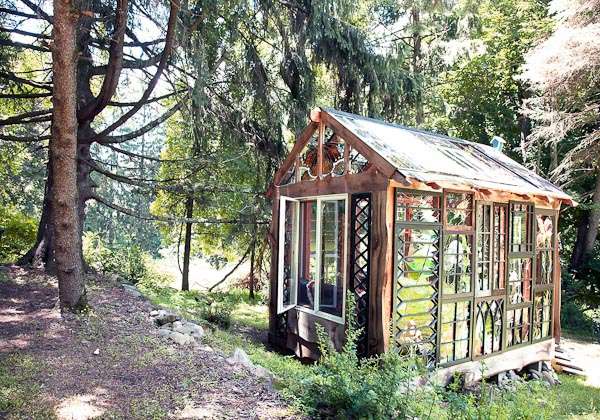
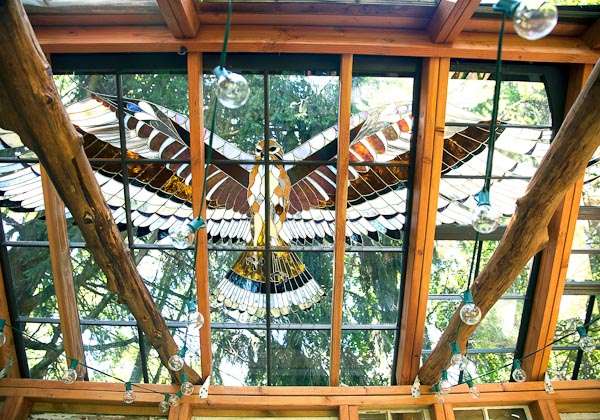
Neile Cooper's Stained Glass Cabin (Sparta/ New Jersey)

Neile Cooper's Stained Glass Cabin (Sparta/ New Jersey)

Artist Neile Cooper sells hand made stained glass item on etsy and this is her studio cabin for which she crafted stained glass walls and ceilings that catch the light beutifully.
It lies nestled in the pine and maple trees behind her home on a quiet residential street in Sparta, New Jersey.

Neile became a stained glass window maker but when the recession hit and the work dried up Neile instead decided to make jewellery.
“Part of the inspiration for doing this cabin was that I missed doing large scale work," she says. "I wanted a big project that I could really immerse myself in. If no one was going to hire me to make windows, I would just make them for myself.”

Neile Cooper's Stained Glass Cabin (Sparta/ New Jersey)

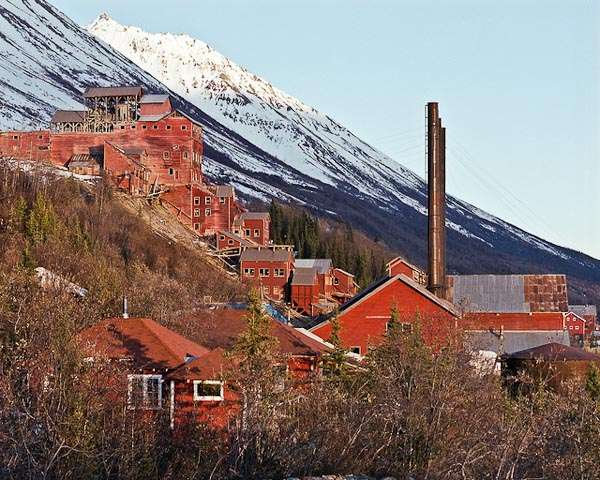
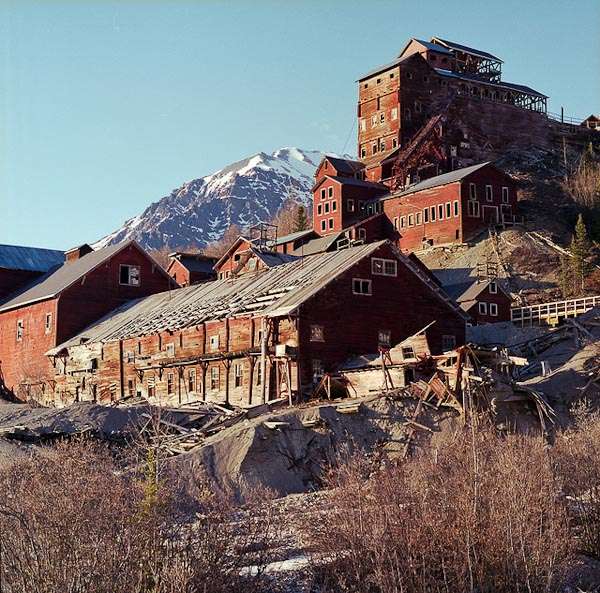
The Kennecott Mines Ghost Town (Kennecott /Alaska)

The Kennecott Mines Ghost Town (Kennecott /Alaska)

The Kennecott Mines is an abandoned copper mining town in the Valdez-Cordova Census Area in Alaska. It is located beside the Kennicott Glacier, northeast of Valdez, inside Wrangell-St. Elias National Park.
From the first discovery of the copper in 1900 it had about 30 years of prosperous business, having the richest known concentration of copper in the world at the time.
By the early 1930s the highest grades of ore were largely depleted and mines started closing one by one. The last train left Kennecott on November 10, 1938, leaving it a ghost town.
By the 1980s the old mines were attracting tourists and in 1980 it was declared a National Historic Landmark.

The Kennecott Mines Ghost Town (Kennecott /Alaska)

Cadillac Ranch (Amarillo/ Texas)

Cadillac Ranch (Amarillo/ Texas)

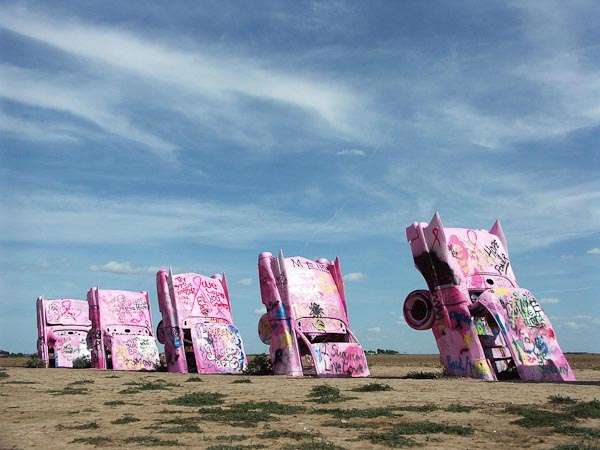
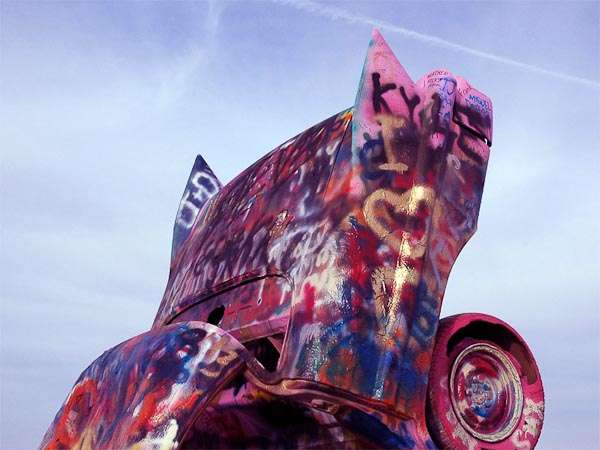
Cadillac Ranch is a public art installation involving 10 vintage Cadillacs. It was created in 1974 by members of the art group Ant Farm.
Since its beginning the car colours have gone through multiple evolutions. White for a TV commercial, then pink because of a founding member's wife's birthday, and again all 10 cars were painted flat black to mark the passing of Ant Farm artist Doug Michels. In 2012 they were painted rainbow colors to commemorate gay pride day. However most of the time you'll find the cars covered in graffiti.

Cadillac Ranch (Amarillo/ Texas)

Gerald DeCock's Colourful Hippie Heaven (NY City/ New York)

Gerald Decock's Colourful Hippie Heaven New York Chelsea Hotel

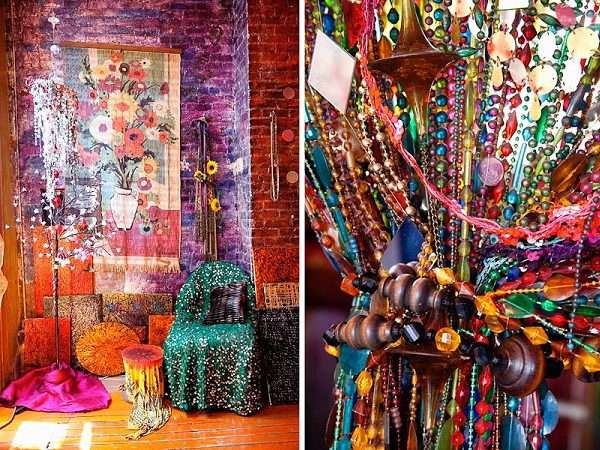
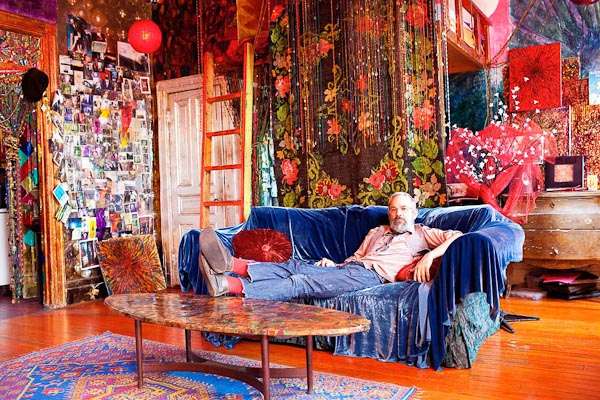
Hair stylist and visual artist Gerald DeCock lives in a rooftop apartment of the Chelsea hotel in New York City.
The space is a colourful explosion of art, beaded curtains, eclectic furniture and various embellishments and decorations. The apartment also has a much cared for rooftop garden with views over the city.

Gerald Decock's Colourful Hippie Heaven New York Chelsea Hotel

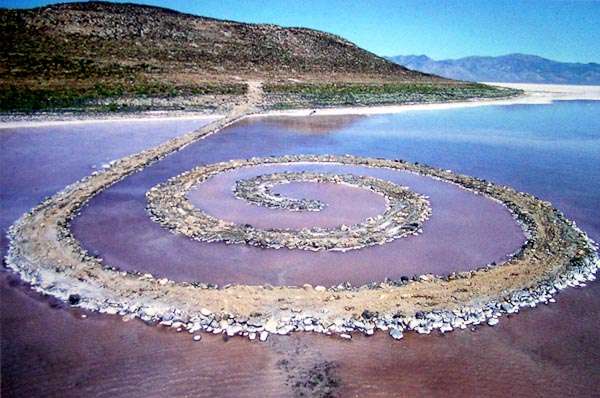
Spiral Jetty (Rozel Point/ Utah)

Spiral Jetty Utah

Spiral Jetty is an earthwork made in 1970 by American sculptor Robert Smithson.
The 15-foot-wide (4.6 m) counterclockwise coil spirals into the northeastern shore of the Great Salt Lake near Rozel Point. It's constructed entirely of mud, salt crystals, and basalt rocks.
The water level of the lake varies with precipitation in the mountains surrounding the area, revealing the jetty in times of drought and submerging it during times of normal precipitation.
Originally black basalt rock against ruddy water, Spiral Jetty is now largely white against pink due to salt encrustation.

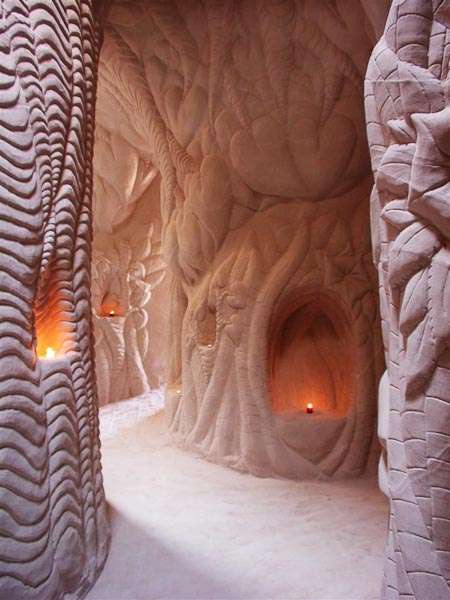
Sandstone Cave Carvings (Northern desert of New Mexico)

Sandstone Cave Carvings New Mexico

For 25 years Ra Paulette has been carving out sandstone caves in the high desert of New Mexico. The now 67 year old had no former training in architecture, sculpting or structural engineering whatsoever. He uses shovels, pick axes and scrapers to create these beautiful spaces in efforts of inspiring “spiritual renewal and personal well being”. He prefers to work by himself, his only assistant being his dog.

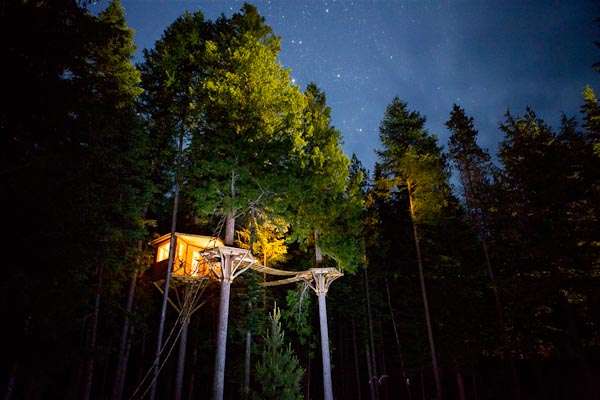
Backyard Treehouse (Sandpoint/ Idaho)

Backyard Treehouse (Sandpoint/ Idaho)

Ethan Schlussler always had a childhood dream of building himself a treehouse bedroom. When he was 18 he sketched a few plans but college got in the way and so it was 5 years until he returned to his childhood home.
“A lot of people have dreams; then they get a job and have a family. And then they get to be 40 or 50 and suddenly realize all their dreams just fell by the wayside. I didn’t want that to happen to me,” he recalls. “Twenty years from now, I didn’t want to be like, Why didn’t I ever build a treehouse when I had the chance? I realized I had the time and the energy and the resources. So I just decided right there: OK, I’m gonna do this.”

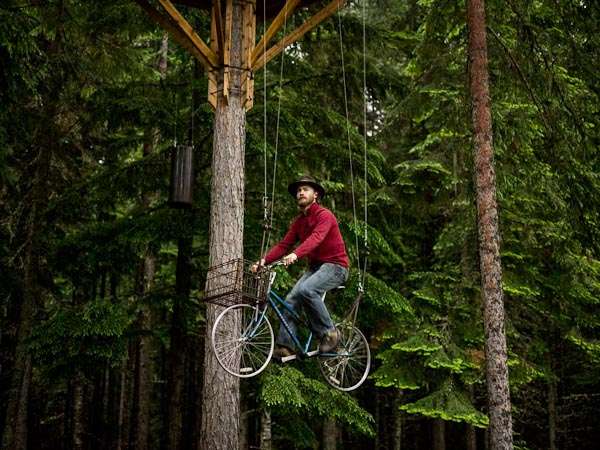
Instead of bolting the structure to the tree he invented a clamping system — a series of 2-by-4s arranged vertically around the trunk and held in place by a metal cable.
To access the treehouse, a bicycle elevator was put in place to ride up vertically into the sky.

Backyard Treehouse (Sandpoint/ Idaho)

The Enchanted Forest (Revelstoke/ Canada)

The Enchanted Forest (Revelstoke/ Canada)

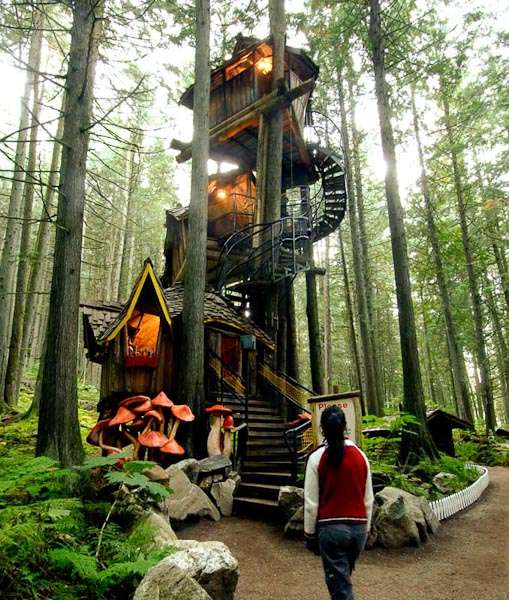
What started off as a retirement project is now known as the The Enchanted Forest theme park. From 1950 to 1971, Doris and Ernest Needham built this fairy tale attraction on 38 acres of forest land. The hand cleared trails feature 350 cement fairy sculptures, a mushroom house, a castle, a life-size recreation of Winnie the Pooh's forest penthouse, a 50-foot-tall treehouse, and other mystical structures.
They are open during summer season from May - October.

El Hongo - Diamond (Acapulco/ Mexico)

El Hongo - Diamond (Acapulco/ Mexico)

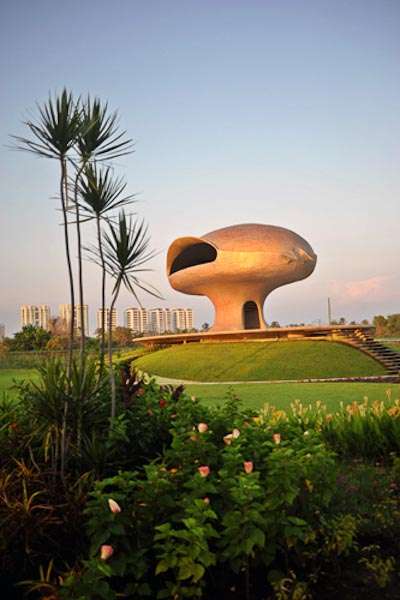
El Hongo is a football Club built by Javier Senosiain, a Mexican architect celebrated as a key exponent and explorer of "organic architecture".
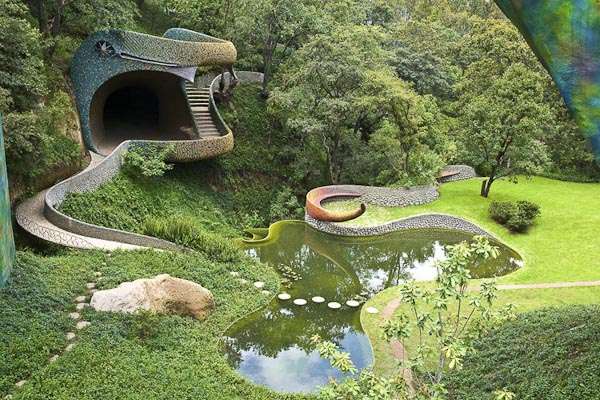
He is also the architect behind these extraordinary buildings: The Nautilus House, The Flower House , Ballena Mexicana, La Serpiente & La Casa Organica.

Cave home (Festus/ Missouri)


This is the home of The Sleeper family who built their home in a cave that dates back to a 1930s sandstone mine underneath a forest.
The three-bedroom home is constructed from glass doors and used materials from a local store. Insulation sealant keeps the inside of the home at a cool 65 to 70 degrees year round.
The inside features vast open spaces with the living and dining areas on the ground floor and the bedrooms on the mezzanine above the kitchen. A spring that runs underground of the forest but above the home puts water into a pond filled with goldfish. To prevent sand from falling into their food, they've constructed a ceiling over the kitchen and put an umbrella over the living, eating, and sleeping areas.

Restaurant of 10,000 Bones (Guadalajara/ Mexico)


"Hueso" restaurant is located in the lafayette design district of Guadalajara, Mexico. It was designed by Ignacio Cadena in collaboration with chef and restauranteur Alfonso Cadena.
Hueso means ‘bone’ in Spanish and the restaurant’s decor is wholly dedicated to the concept, with each of the elements embodying the shapes and textures of skeletal forms.
Mounted on the walls are 10,000 cast aluminium bones and in lieu of a sign at the entrance, an aluminium bone hangs by the door.
The architectural ‘bones’ of the building (brick work, plaster and pipes) are also partially exposed and painted white. Hueso’s exterior features handmade tiles decorated with folk patterns that resemble craft and stitching.

Mushroom Dome Cabin (Aptos/ California)


Located in a quiet yet convenient location the Mushroom Dome Cabin is the perfect destination for both San Francisco Bay area residents and travelers.
Centrally located on the Monterey Bay, it's only 10 minutes from the beach (Rio Del Mar and Seacliff State Beach) and 20 minutes to downtown Santa Cruz. The 10,000 acre Nisene Marks State Park is ideal for hiking or dirt biking in the Redwoods and along Aptos creek.

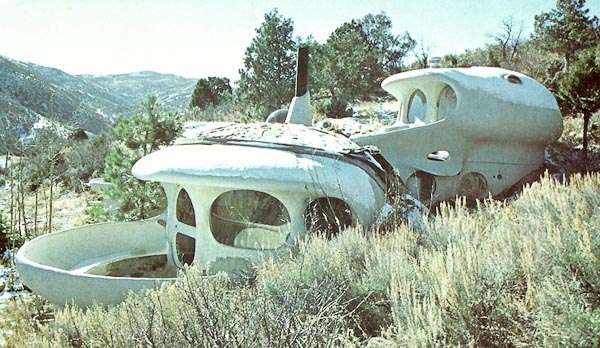
The cozy and clean semi-rustic cabin has a loft under a geodesic dome (the "mushroom cap"). The interior ceiling has recently been lined with 144 plywood triangles. The loft has a double bed and downstairs you'll find a little kitchen, seating area with fold out table, and bathroom with shower.

Crystal River Tree House (Carbondale/ Colorado)


This tree house speaks to adults and children alike.
It was designed in collaboration by Green Line Architects and "tree house expert" David Rasmussen.

The 230 square-foot tree house is mainly supported by log columns, since the trees on the property weren't strong enough to build on. All framing materials for the house are reclaimed timber, including the sheathing and siding which are locally-sourced white pine and cedar. The walls are insulated and there's also a wood stove to keep the space cozy in winter.

Tiny Dwellings in the Meadow (Joseph/ Oregon)


Situated in a 2 acre meadow along the Wallowa River in eastern Oregon, Dan Price's hobbit houses are barely visible in the natural landscape.
The adventurer and author has been living in this meadow for 25 years now.
As an advocate for minimal living, Price believes tiny homes can make for a happier life, without the financial burden that can come with larger homes. Looking to downsize his life, he rented a plot of lush forest in 1990, and began building tiny homes on it. The first was a tipi, then came huts, sheds and now the underground room. The other yurt- type house is a propane powered sweatlodge.

Mosaic Stairs (San Francisco/ California)


The 16th Avenue Tiled Steps are one of San Francisco's hidden art gems located on Moraga Street between 15th & 16th Ave.
Apart from some amazing views of the city, you'll get to appreciate a beautiful mosaic running up 163 steps. Irish ceramist Aileen Barr and mosaic artist Colette Crutcher joined forces, working with over 300 community volunteers for over 2 1/2 years until they unveiled the project in August 2005.
The sweeping sea-to-sky design features over 2,000 handmade tiles and 75,000 fragments of tile, mirror and stained glass.

La Serpiente - The Snake (Naucalpan/ Mexico)


This fantastic snake-shaped structure is an apartment building designed by Javier Senosiain, a Mexican architect celebrated as a key exponent and explorer of "organic architecture".
The land it was constructed upon proved to be both, a challenge and an inspiration for the architect. He included the irregular shapes and caves in the design - the biggest cave got transformed into a giant serpent's head inspired by Aztec snake god Quetzalcoatl.

John Wild's Cob Home (Aspen/ Colorado)


Not much is known about this beautiful creation of organic-architecture other than that it belongs to a man called John Wild and that it was built in 1970 in Aspen Colorado.


House of Nekko - Cat Villa (Goleta/ California)


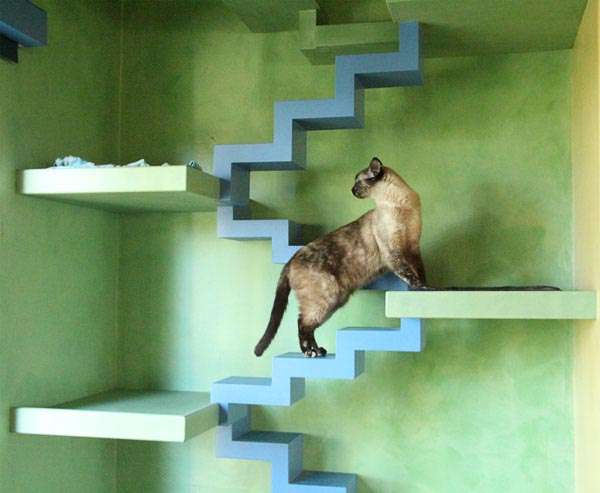
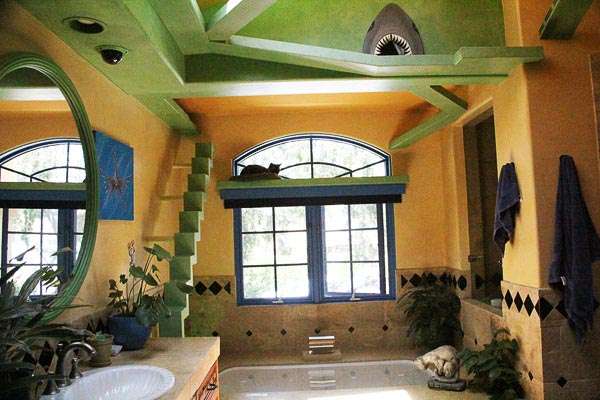
Inspired by Bob Walker's 1996 book The Cats' House, Peter Cohen turned his home into a cat paradise. It features 46 metres of tunnels, staircases and skywalks custom-made for his many rescue cats.
As a co-owner of Trillium Enterprise Custom Builders, he was able to access the required team and materials to create his dream. The skywalks alone cost more than $40,000.
The house has 25 security cameras to watch the cats (Installing home surveillance equipment is a sideline business of Peter’s.). There's 24 litter boxes, some of which have fans to eliminate odour, while mobile vacuum cleaners keep loose fur at a minimum.


Cano's Castle (Antonito/ Colorado)


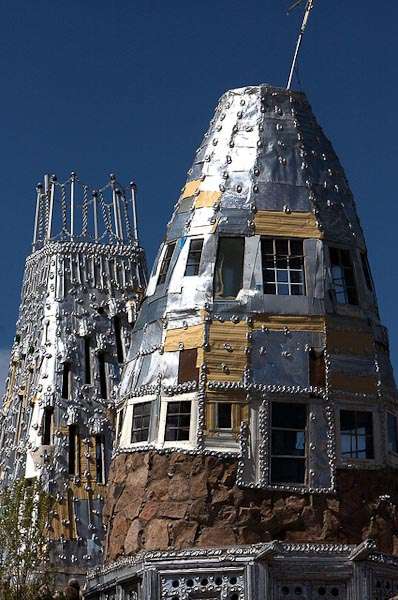
The shiny towers of Cano's Castle stand out amidst an otherwise unremarkable neighborhood. It is decorated with scrap metal such as cut-apart & inside out beer cans, wire, hubcaps, grills, screen doors and other junk like bicycle reflectors for colour.
It is the ongoing creation of Cano - originally called Dominic Espinosa, who started it in the 80s. When asked about the creation he responds: "God built it". There are reports that Cano invented his name because of all of the beer cans, but he said it's pronounced CAH-no and that it's "an Indian name, like, 'reborn.'"

Despite the roomy castle he actually lives in a trailer across the street and Jesus can have the castle to himself. Cano lives off of the land, with a well-tended garden and a pen of goats, geese, and sheep. He enjoys it when visitors stop by to see his creation. If you would like to see Cano's Castle, it's located at East 10th Avenue and State Street in Antonito.
Related Posts Plugin for WordPress, Blogger...